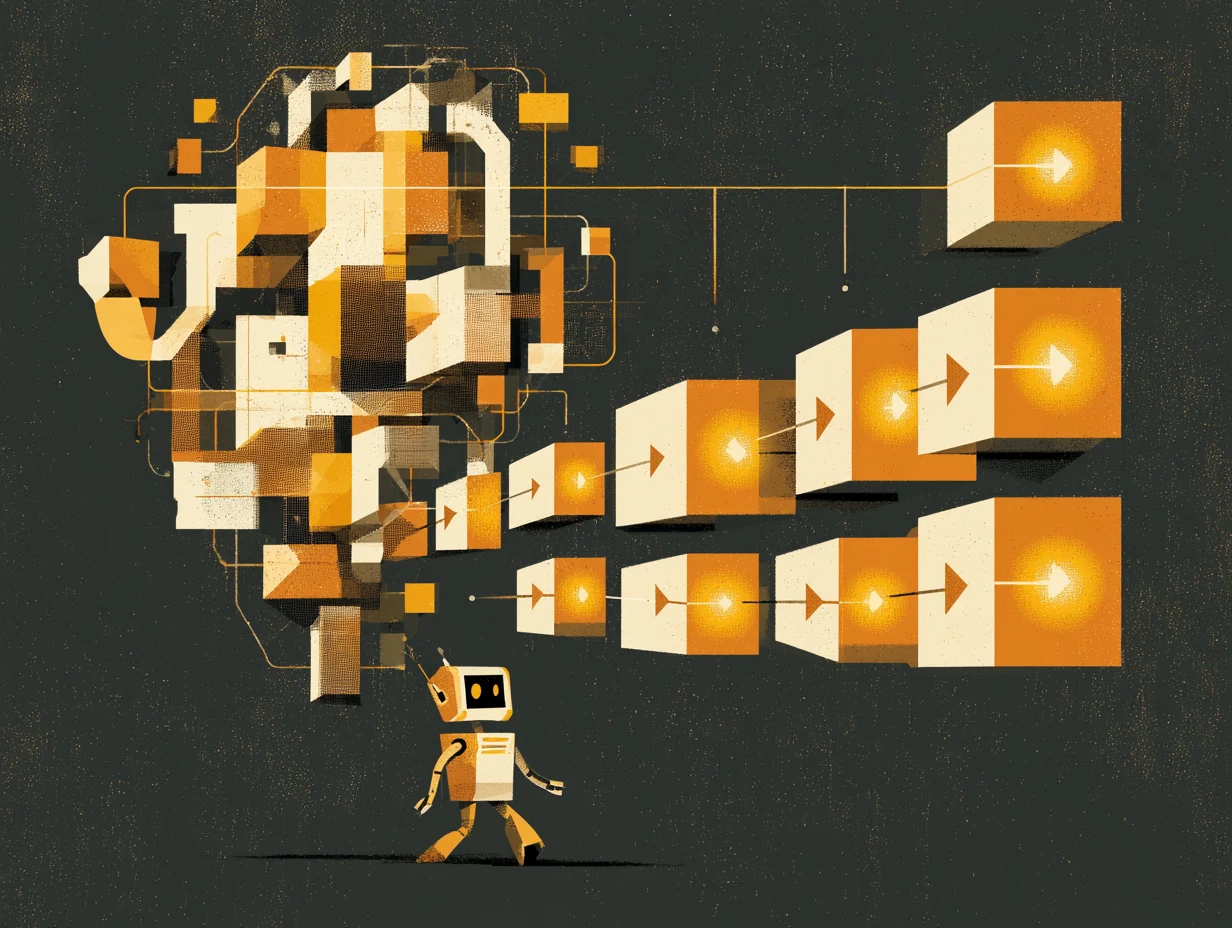

Why AI Fails When Your Processes Are Vague (and How to Fix It Before You Automate Anything)
Most businesses fail at AI not because the tools are wrong but because the processes were never clearly described. Here is the framework for going atomic before you automate anything.
Every small business owner who has tried AI and given up makes the same mistake. They go from vague frustration directly to automation. "I spend too much time on follow-ups" becomes "automate my follow-ups" and the result is garbage: a chatbot that says the wrong thing, emails that go out at the wrong time, or a tool that handles three scenarios and breaks on the fourth. The tool gets blamed. But the tool was never the problem.
The problem is that nobody described what good follow-up actually looks like. What triggers it. When it happens. What a successful one produces. When the input to an automation is vague, the output is vague. Garbage in, garbage out is not a cliche, it is an accurate description of every failed AI rollout we have seen. The businesses that succeed with AI are not using better tools. They are describing their processes with more precision before they build anything.
We call this going atomic. An atomic business process has three things: a clear input, a clear output, and a checkpoint between them. It is small enough to describe in one sentence. "When a new inquiry comes in through the website, a follow-up email goes out within 15 minutes with the client name, the service they asked about, and a link to book a 20-minute call." That is an atomic process. "Handle all follow-ups" is not. The difference between those two descriptions is the difference between an automation that works and one that requires constant human correction.
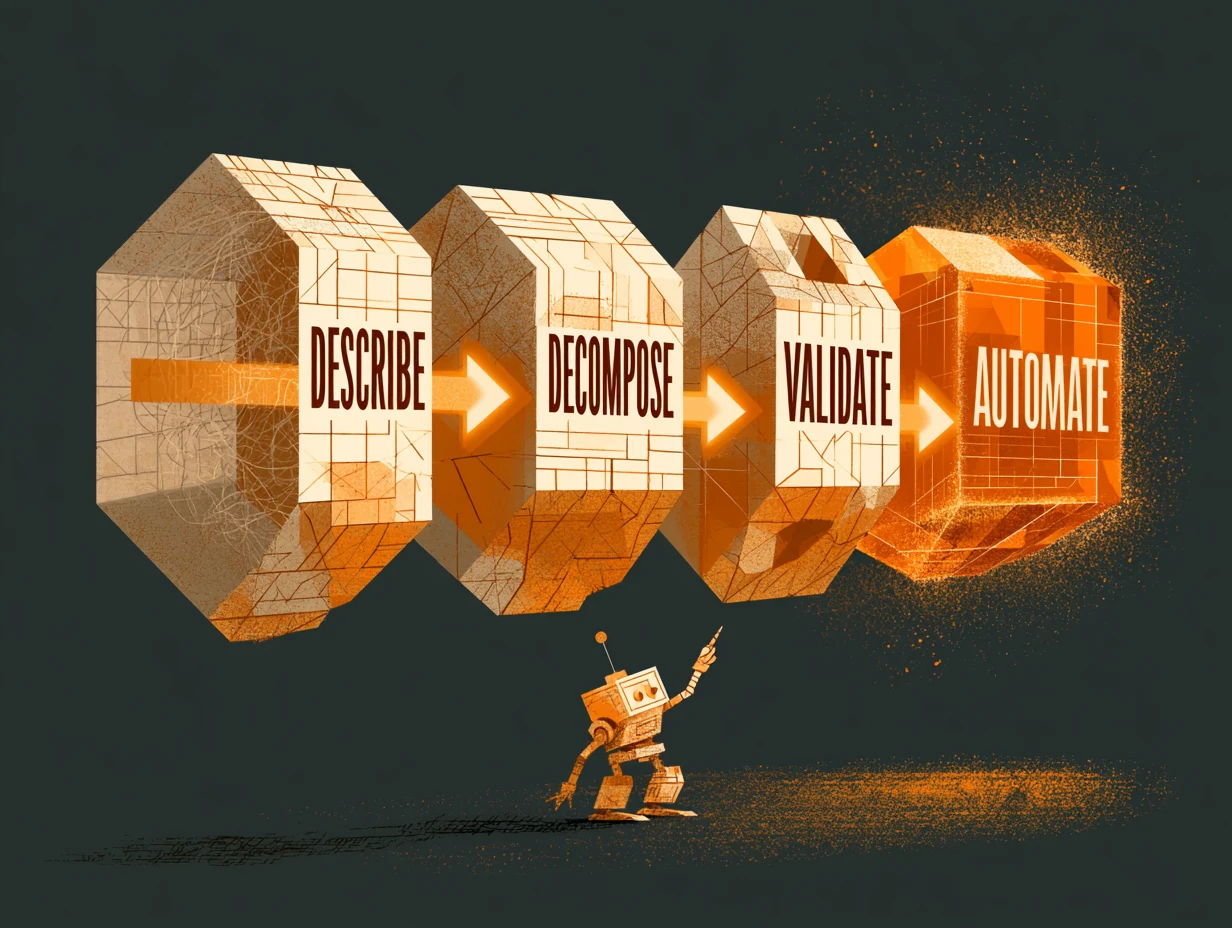
The progression from chaos to automation has four stages: describe, decompose, validate, automate. Describe means writing down what actually happens today, not what you wish happened. Decompose means breaking that description into the smallest meaningful units. Validate means confirming that each unit produces the right output before connecting it to the next one. Automate means building the system once the process is clean, agreed-upon, and tested by hand. You cannot skip steps. Businesses that jump from "I have a problem" to "automate it" land back at step one after spending money.
The decomposition challenge looks different depending on scale. For an individual, the question is: can you describe what you do in small enough steps that each one has a clear input and output? Most people cannot. They say "I do client intake" when what they actually do is 14 discrete things across 3 tools over 2 days. For a team, the question compounds: can everyone agree on how the process works? Not how one person does it, but how the business does it. Most 5 to 15 person operations discover they have three different versions of every workflow when they try to write them down together.
Before we automate anything for a client, we run a process audit. We watch how they actually do the work today, not how they describe it. The gap between those two things is where the real problems hide. A dental practice told us their intake process was "pretty standard." The audit found seven manual handoffs, three places where information got re-entered into different tools, and two steps that only one specific person knew how to do. Automating the "pretty standard" version would have made those problems faster, not fixed them.
The diagnostic question we ask at the end of every discovery conversation is: "If you could automate one thing and it ran perfectly for 12 months, what would it be?" After 10 minutes of talking through operations, this question reliably produces a specific answer. "The follow-up email to people who submit the contact form but do not book a call." That specificity tells us the process is real and the person has thought about it. Then we ask one more: "Walk me through exactly how that process works today, step by step." The answer to that second question determines whether we are ready to build. If they can walk us through it cleanly, we can automate it. If they cannot, we describe it first. That is going atomic in practice.
Topics
Read next
Want to see these systems in action?
Start with a conversation. We will walk through how these workflows apply to your business.
Get your AI Roadmap